Contemporary art is a dark spot of aesthetics

Авторы

DOI:

https://doi.org/10.34680/EISCRT-2026-1(14)-19-44

Ключевые слова:

aesthetic, contemporary art, art criticism, poetics, philosophy of art, practical aesthetics, aestheticization, philosophy, aesthetic autonomy, crisis of aesthetics

Аннотация

This article addresses an important question for both aesthetics and art: can aesthetics critique contemporary art? The answer is provided from two perspectives: Russian and Chinese. The overall diagnosis is as follows:
on the one hand, contemporary art is not the subject of aesthetic critique.
On the other, aesthetics that ignores contemporary art's assessments loses artists' interest. The authors recognize that dissatisfaction with aesthetics is as old as aesthetics itself. Nevertheless, this dissatisfaction has had its own unique roots in every era. The authors examine the current state of aesthetics in terms of its relationship to art. The specificity of this era is determined by
the fact that today, art critiques aesthetics more than aesthetics critiques art. In the previous era, aesthetics, if it addressed contemporary art at all, never examined a specific work, but addressed art as a whole. Contemporary art evoked not only the figure of the curator, but also his invariable attribute – a clearly formulated concept of art – which brought the curator's position closer to the philosophy of art. The research methodology utilizes topological reflection – a concept developed by
V. Savchuk. In the spirit of A. Schlegel’s diagnosis of the obscure word “aesthetics”, the article analyzes the concept of “practical aesthetics”, designed to address the emerging problems of aesthetics. The inherent contradiction of this concept is explicated as follows: when aesthetics criticizes a specific work, it either forgets itself, losing touch with the categories of “beautiful” and “ugly” that define its discipline, or, remaining at the level of the universal, fails to come any closer to understanding the specific work. This, once again, leads it to self-annihilation. Practical aesthetics, in turn, is a form of self-deception, for contemporary art defines itself through the destruction of the boundaries and norms established by dominant aesthetics. The authors demonstrate how similar tendencies are refracted in the very different contexts of Russia and China. Important here are the concepts of hybrid identity, postcolonial trauma, and self-destructive gestures in contemporary art. The final conclusion is that the concept of “practical aesthetics” is false not in itself, but rather the method, methodology, and attitude that holds the researcher captive to the old aesthetic paradigm. The critical potential of aesthetics has yet to be fully realized, and its movement toward concrete criticism and evaluation will be realized if it is capable, freed from paternalism and arrogance, of conveying to viewers what no critic, curator, or art theorist can convey about a specific artist’s work. In this way, it will be able to transform the obscurity of contemporary art into a platform for profound and precise understanding, undeniable by any known discourse.

Скачивания
Данные скачивания пока недоступны.

Биографии авторов

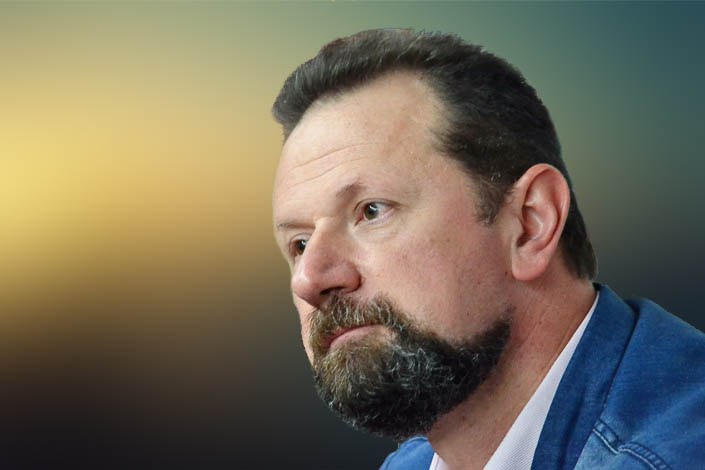
Valery Savchuk, St. Petersburg State University, St. Petersburg, Russia

Doctor of Philosophical Sciences, Professor of the Department of Cultural Studies, Philosophy of Culture and Aesthetics at the Institute of Philosophy
e-mail: savcuk.valeri@gmail.com


Chaoran Jiang, St. Petersburg State University, St. Petersburg, Russia

PhD student, Professor of the Department of Cultural Studies, Philosophy of Culture and Aesthetics at the Institute of Philosophy
e-mail: chaoranjiang@yandex.ru

References

Arutiunova, A. (2015). Art Market in the 21st Century: Space for Artistic Experimentation. Moscow: Dom HSE Publ. (In Russian).

Bakhtin, M. (1979). Aesthetics of verbal creation. Moscow: Iskusstvo Publ.
(In Russian).

Bois, Y., Buchloh, B., Foster, F., Joselit, D., & Krauss, R. (2016). Art since 1900: Modernism, antimodernism, postmodernism. London: Thames & Hudson.

Bradshaw, P. (2017). Human Flow review – Ai Weiwei surveys shocking plight
of migrants on the move. The Guardian: website. URL: https://www.theguardian.com/film/2017/dec/07/human-flow-review-ai-weiwei-migration-documentary (accessed: 22.10.2025).

Danto, A. (2015). After the End of Art: Contemporary Art and the Pale of History. Cambridge: Princeton University Press.

Deleuze, G., & Guattari, F. (1994). What is philosophy? New York: Columbia University Press.

Foster, H. (1999). Recodings: Art, spectacle, cultural politics. Washington:
Bay Press.

Griakalov, A. (2004). Writing and the event: an aesthetic topography of modernity. St. Petersburg: Nauka Publ. (In Russian).

Hegel, G. W. F. (2001). Philosophy of Right. Kitchener: Batoche Books Publ.

Jiménez, M. (2010). The quarrel over contemporary art. Buenos Aires: Amorrortu Publ. (In Spanish).

Khoruzhii, S. (2008). Theater of Situations. LibFox: website. URL: https://www.libfox.ru/294958-sergey-horuzhiy-teatr-situatsiy-2008.html (accessed: 09.04.2025). (In Russian).

Michaud, Y. (1997). The crisis of contemporary art: utopia, democracy and comedy. Paris: Presses universitaires de France. (In France).

Nikitina, I. (2012). Aesthetics: textbook for bachelors. Moscow: Urite Publ.
(In Russian).

Prozerskii, V., & Golik, N. (eds.). (2011). History of Aesthetics: Textbook. St. Petersburg: Publishing House of the Russian Christian Humanitarian Academy. (In Russian).

Radeev, A. (2025). Rediscovering Practical Aesthetics. International Journal
of Cultural Studies, 2
 (59), 619. (In Russian).

Rancière, J. (2009). Aesthetics and its Discontents. Cambridge: Polity Publ.

Savchuk, V. (2002). Philosopher as artist. In I. (A. Slinin) and WE: On the 70th Anniversary of Professor Yaroslav Anatolyevich Slinin. (с. 422–444).
St. Petersburg: St. Petersburg Philosophical Society Publ. (In Russian).

Savchuk, V. (2004). Mode of relevance. St. Petersburg: SPbU Publ. (In Russian).

Savchuk, V. V. (2018). Phantom Aesthetics in Media Philosophy. In Martynovа, S. A. (comp.). Life and Writing: A Collection of Articles on the 70th Anniversary of A. A. Gryakalov (pp. 162–173). St. Petersburg: Herzen State Pedagogical University Publ. (In Russian).

Welsch, W. (1997). Undoing aesthetics. London: Sage Publications Ltd.

Wilkoszewska, K. (ed.) (2014). Aesthetics in Action: International Yearbook of Aesthetics, Vol. 18. Kraków: Wydawnictwo Libron.

Загрузки


Просмотров аннотации: 58

Опубликован

2026-03-26

Как цитировать

Savchuk, V., & Jiang, C. (2026). Contemporary art is a dark spot of aesthetics. Индустрии впечатлений. Технологии социокультурных исследований, 1 (14), 19–44. https://doi.org/10.34680/EISCRT-2026-1(14)-19-44